Risk-Based Evaluation Turns Hatchery Vaccination Checks Into Process Control
Risk-based evaluation helps hatchery teams identify consequential process deviations and prioritize corrective action across sanitation, vaccine handling, and in ovo application.
In ovo vaccination depends on a controlled biological process, not only on the presence of the right equipment or vaccine. Embryos are vaccinated during late embryonic development, while vaccine handling, equipment sanitation, application technique, and hatchery workflow all interact inside a high-throughput system. When one of those process points drifts, the result may not be visible immediately at the hatchery, but it can increase the risk of inconsistent vaccine delivery, chick-quality concerns, or downstream performance problems.
That is why process evaluation becomes most useful when it identifies where risk sits in the process and how urgently the hatchery team should respond. A single overall score can make a process look acceptable even when one step has potentially important biological consequences. A risk-based evaluation framework instead separates routine observations from process deviations that warrant different levels of corrective action.
In Ovo Vaccination Scales a Sensitive Biological Step Modern in ovo vaccination replaced much of the historical practice of vaccinating one chick at a time. The production difference is substantial: manual chick vaccination can involve very large daily chick volumes, while automated in ovo systems may vaccinate tens of thousands of eggs per hour. That speed creates efficiency, but it also makes process control more consequential because a sanitation or handling issue can move through a large number of embryos quickly.
In ovo vaccination is typically performed during late embryonic development, commonly around day 18 of incubation in chickens, before transfer and hatch. The main variables include embryo targeting, vaccine handling, injection accuracy, and sanitation. Inadequate sanitation can increase the risk of introducing contamination during the vaccination process, making hygiene and equipment sanitation essential components of effective in ovo programs. Successful in ovo vaccination also depends on consistent vaccine deposition into the appropriate embryonic compartment. Factors such as embryo development, egg positioning, equipment setup, and injection accuracy can therefore influence the consistency of vaccine delivery.
Vaccine handling adds another layer of risk. Cell-associated vaccines, such as those used for Marek’s disease control, require strict adherence to manufacturer-specific thawing, dilution, temperature, mixing, and administration procedures to preserve viable vaccine cells. Deviations from recommended handling procedures may reduce vaccine quality or consistency without necessarily producing an immediate change in hatchery KPIs, making downstream flock monitoring an important part of evaluating vaccination performance.
Why Scores Can Hide Critical Process Failures A score-based evaluation can flatten the difference between a minor observation and a process point that needs immediate attention. In the episode’s sanitation example, a single critical deviation under the earlier scoring approach could still produce an overall score of 97 out of 100. Although that number appears strong, it may obscure the biological importance of sanitation within the in ovo process.
The problem is not that scoring lacks information; it is that the score can obscure the weight of different process points. If hatchery leadership sees a high number without a clear risk classification, the response may be too slow or too general. A high score can create false reassurance when the failed point is one that should stop the process for correction and training.
Risk-based reporting changes the interpretation. Each process point is defined by its expected range and classified by the consequence of noncompliance. Instead of asking whether the final score is acceptable, the team can ask which process point failed, what outcome it may affect, and whether the response should be immediate or part of a follow- up improvement plan.
Critical, High, and Moderate Risks Require Different Responses In the risk-based evaluation framework discussed here, process deviations are classified as critical, high, or moderate according to their potential consequences. Critical findings represent process deviations considered serious enough to require immediate attention because of their potential direct impact on vaccination, hatchery performance, or bird health. When that level appears, the framework calls for prompt training or correction rather than waiting for a later report.
High findings signal significant potential impact, although the effect may not be immediately apparent at the hatchery level and may emerge in later flock monitoring. Moderate findings may indicate opportunities for process improvement and, when repeated or combined, can contribute to greater operational or performance risk over time. This classification matters because hatchery teams manage many inputs at once. A hatchery manager, field service associate, or newer evaluator needs more than a pass-fail answer. They need to know whether a finding can affect hatch, seven-day mortality, grow-out performance, processing outcomes, or data integrity. The risk level gives that context before the issue becomes a larger production problem.
Corrective Actions Make Evaluation Operational An evaluation becomes more useful when it gives the manager a practical follow-up path. Updated process reporting includes clearer corrective actions for process points, including expectations the hatchery team can use to hold crews accountable. That shifts the evaluation away from a simple audit and toward a training and communication tool.
The distinction is important in a hatchery because personnel changes, shift-to-shift variation, and repeated high-volume work can make process drift likely. In-the-moment training helps connect the task to its purpose. Crew members often see eggs moving through the process, while the chick and field outcomes happen elsewhere. Explaining how vaccination inside the embryo connects to healthy chicks and downstream performance can improve the consistency of daily execution.
Corrective actions also help standardize follow-up after the evaluator leaves. If a report only identifies that something was wrong, the hatchery team still has to interpret what to do next. When the report explains the impact area and suggested correction, the manager can inspect the same point, retrain against the same expectation, and track whether the process becomes more consistent.
Process Control Connects Hatchery Work to Field Outcomes The central technical value of risk-based evaluation is that it helps hatchery teams interpret process deviations in relation to outcomes beyond the room where vaccination occurs. Vaccination performance may require downstream flock monitoring because some differences are not apparent at hatch. Sanitation failures can increase contamination risk, with potential consequences for hatchability, chick quality, early mortality, and subsequent flock health depending on the nature and severity of the deviation. Reliable process data also support more consistent follow-up and decision-making.
That broader view keeps the evaluation from becoming a checklist exercise. The goal is not simply to record compliance; it is to identify which process points create risk, explain why the risk matters, and help prioritize corrective action. For in ovo vaccination, that means managing automation with the same care required by the biology inside each egg.
Risk-based process evaluation is therefore most valuable when it helps a high-volume system identify potentially consequential deviations that an overall score might hide. By distinguishing moderate trends from findings requiring immediate attention, the framework can improve interpretation of process deviations and support timely corrective action in vaccine handling, sanitation, and application consistency.
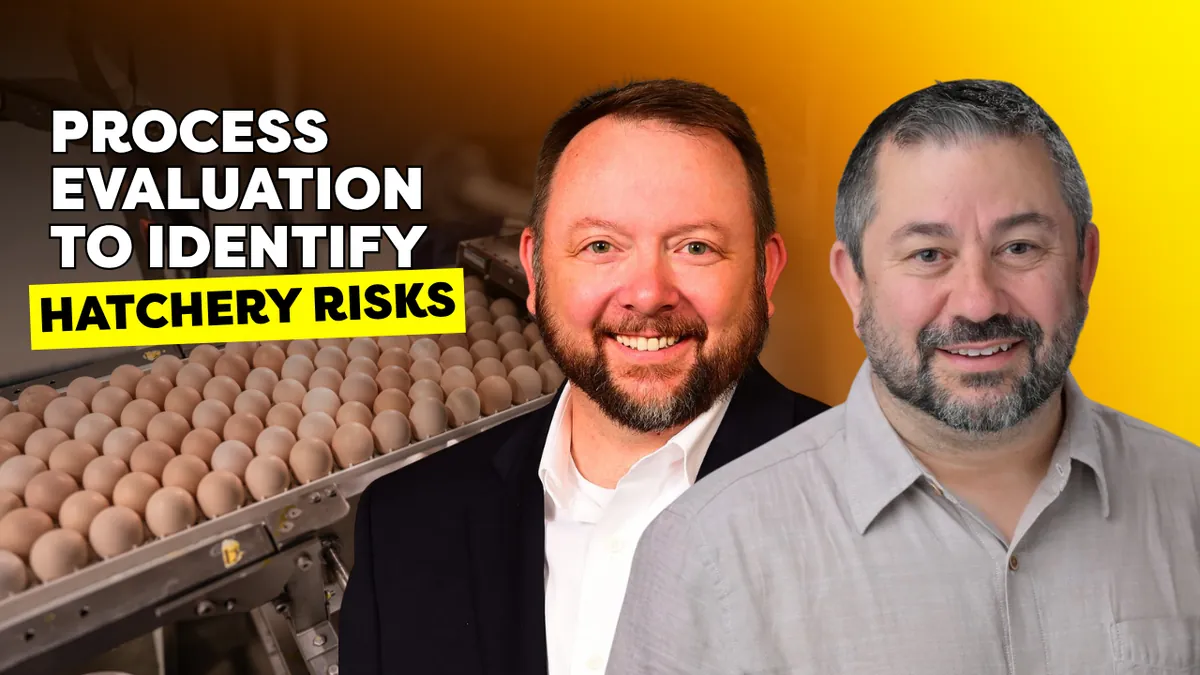
Listen to The Poultry Podcast Show Ep. 208, “Stoney Dorning & Kevin Dudley: Risk- Based Approach to Identifying Hatchery Opportunities”, for the full discussion.